
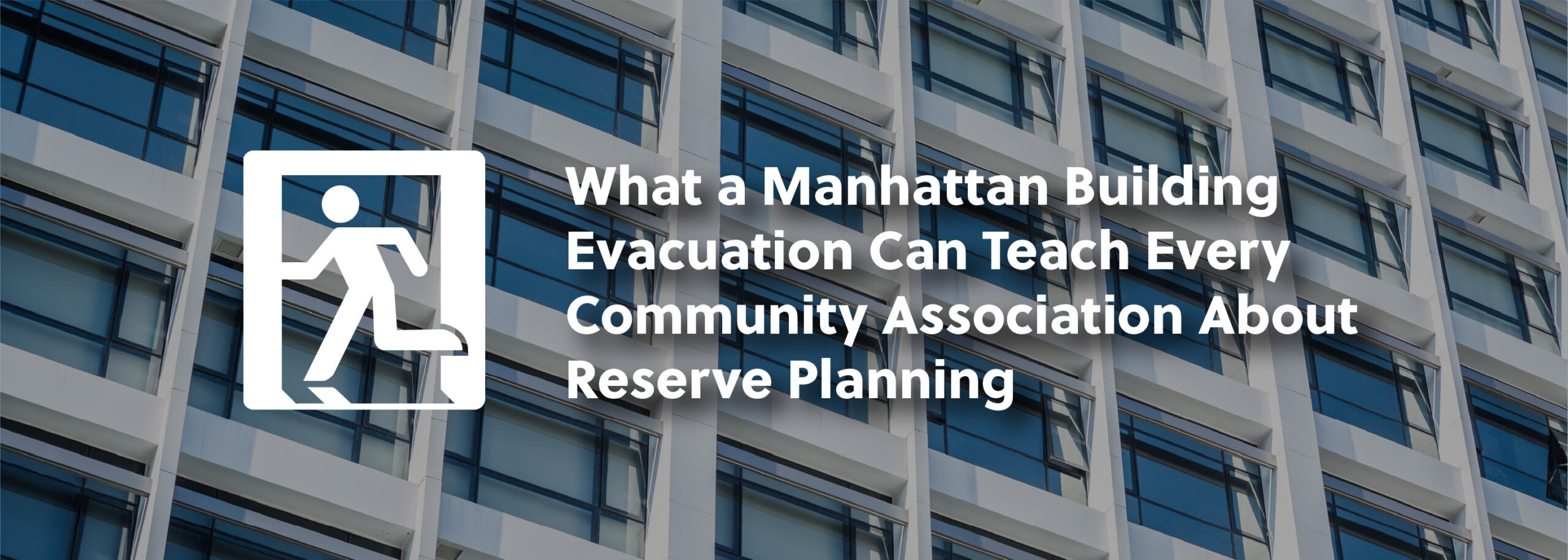
A former commercial high-rise in Midtown Manhattan, undergoing a residential conversion, was evacuated after construction workers discovered structural support columns beginning to buckle. The discovery prompted emergency evacuations of the building and neighboring properties while engineers worked to stabilize the structure. Thankfully, no injuries were reported, but the incident underscores just how quickly structural concerns can become public safety issues when critical building components are compromised. (Reuters)
While most community associations will never experience an event of this magnitude, the underlying lesson is one every condominium and homeowners association board should take seriously: preventative maintenance and long-term financial planning are essential to protecting both residents and property values.
Inspections Are More Than a Compliance Requirement
Routine inspections are designed to identify issues before they become emergencies. Structural components, roofing systems, balconies, parking garages, drainage systems, and building envelopes all experience wear over time. Even when everything appears normal from the outside, hidden deterioration can develop beneath the surface.
Professional inspections help boards:
- Identify developing maintenance issues early.
- Prioritize repairs based on risk and urgency.
- Budget for future capital projects.
- Demonstrate due diligence in protecting the community.
Addressing problems early is almost always less disruptive—and significantly less expensive—than responding to an emergency.
Reserve Funds Are Your Community’s Safety Net
Even the best-maintained buildings eventually require major repairs or replacements. That’s why reserve funds exist.
A well-funded reserve account allows an association to:
- Replace aging building systems without delaying critical work.
- Reduce the likelihood of large special assessments.
- Minimize financial surprises for homeowners.
- Respond more effectively when unexpected repairs arise.
Reserve studies should not be viewed as a one-time exercise. As buildings age, construction costs change, and maintenance priorities shift, reserve studies should be updated regularly to ensure funding keeps pace with future needs.
Deferred Maintenance Comes at a Cost
One of the greatest risks for any association is postponing necessary repairs because they are inconvenient or expensive. Unfortunately, building systems don’t pause their deterioration while boards debate budgets.
Small issues can evolve into:
- Water intrusion and mold.
- Structural deterioration.
- Increased repair costs.
- Insurance complications.
- Safety concerns for residents and guests.
Proactive maintenance is not simply an expense, it’s an investment in the longevity of the community.
Strong Governance Protects Communities
Successful community associations take a long-term approach to asset management. That means partnering with qualified engineers, maintaining updated reserve studies, budgeting responsibly, and acting on professional recommendations before problems escalate.
The recent events in Manhattan are still under investigation, and it would be premature to draw conclusions about what caused the structural failure. However, the situation serves as a valuable reminder that buildings require continuous oversight throughout their lifespan. (The Guardian)
For boards, the takeaway is clear: regular inspections, proactive maintenance, and healthy reserve funding aren’t just best practices—they’re fundamental to protecting residents, preserving property values, and ensuring the long-term success of the community.
At Kiwi Condo Management, protecting the residents who live and work in our communities is always our top priority. That’s why we emphasize proactive maintenance and regular property inspections to help identify potential issues early. Click here to contact our team today to learn how proactive planning and expert condo association management can help protect your community!

Recent Comments